
AI & Machine Learning
Can ai chat Characters Really Understand Who I Am?
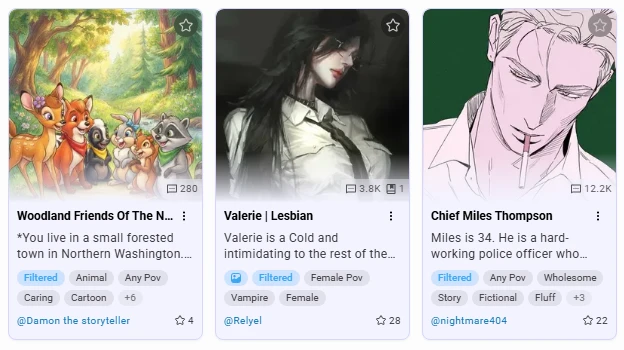
AI chat characters can understand many aspects of a person through conversation history, language patterns, preferences, and repeated interactions. Research published between 2020 and 2025 shows that large language models can predict some personality traits from text with measurable accuracy, while memory systems improve user satisfaction by around 20%–40% in conversational tests. However, AI recognition is based on patterns and information processing rather than human feelings or personal experience.
AI chat characters learn about users through the information provided during conversations. When someone repeatedly discusses favorite topics, preferred response styles, personal goals, or daily habits, the AI can adjust future replies to match those preferences. A user who asks for scientific explanations, detailed examples, and structured answers may receive increasingly technical responses after multiple sessions.
Large language models behind these characters are trained on huge collections of text. Models released after 2020 contain billions or even hundreds of billions of parameters that help them identify relationships between words, concepts, and communication styles. The system does not store a complete copy of a person’s identity. Instead, it calculates likely responses based on available conversation information.
“AI can recognize patterns in how a person communicates, but recognizing patterns is different from knowing someone personally.”
Memory features have changed how people interact with AI characters. Earlier chatbots usually treated each conversation as a separate session. Modern systems can save selected information, such as preferred writing tone, favorite subjects, or ongoing interests.
A 2024 study on personalized conversational agents found that users reported higher satisfaction when AI remembered previous preferences. In some evaluations, personalized responses improved user ratings by more than 30% compared with generic replies. This explains why some users feel that an AI character becomes more familiar over time.
The information remembered by AI is usually limited to specific details. A chatbot may remember that someone enjoys astronomy, prefers short answers, or likes friendly conversations. However, it does not experience memories in the same way humans do.
A close friend understands a person through years of shared experiences, emotions, and real-world situations. AI does not have personal experiences with users. It can identify that someone often writes about stress, but it does not feel concern or remember emotional moments like a human friend would.
Personality understanding is one area where AI appears surprisingly accurate. Researchers have tested whether language models can estimate personality characteristics from written communication. Studies using frameworks such as the Big Five personality model have shown that AI systems can identify certain traits from text samples.
For example:
| User behavior in conversations | Possible AI interpretation |
|---|---|
| Frequently requests detailed explanations | Preference for analytical information |
| Uses emotional descriptions often | Higher emotional expression |
| Asks many follow-up questions | Strong interest in exploration |
| Prefers direct answers | Preference for efficient communication |
A 2023 research review showed that language-based personality prediction models achieved moderate to high accuracy depending on the dataset and evaluation method. However, results depend heavily on the amount and quality of available text.
This limitation appears when people change their behavior. Someone may communicate differently at work, with friends, or during stressful periods. If an AI only sees one side of a person’s communication style, its understanding may not represent the whole individual.
Emotional understanding creates another interesting difference between humans and AI. Many AI chat characters are designed to recognize emotions through words, sentence structure, and conversation context. They can respond to sadness, frustration, excitement, or uncertainty.
For example, when a user writes that they feel disappointed after failing a project, an AI can provide supportive language because it has learned patterns from similar conversations. It can suggest solutions, encourage reflection, or ask questions that continue the discussion.
However, the AI does not experience disappointment itself. It generates a response that matches the situation based on learned communication patterns. This difference has become an important topic as AI companions become more common.
The use of AI companions has expanded rapidly since 2022. Millions of users now interact with conversational characters for entertainment, creativity, learning, and personal conversations. Some platforms report that users spend hours each week communicating with AI characters, especially when the systems provide consistent personalities and personalized replies.
Different types of AI characters serve different purposes. Some focus on productivity, some provide fictional roleplay experiences, and others are designed for adult-oriented conversations, including platforms discussing nsfw ai. These systems often rely on similar language technologies but apply different conversation rules and character designs.
The feeling of being understood often comes from consistency. When an AI character remembers previous preferences, uses familiar language, and responds in a predictable style, users may feel that the interaction is more personal.
Researchers studying human-computer interaction have found that people naturally respond socially to machines that communicate smoothly. A 2021 review of human-AI interaction studies showed that conversational quality, personalization, and perceived empathy strongly influenced user attachment to digital systems.
Still, AI understanding has boundaries. It cannot independently observe a person’s life, understand physical experiences, or share real memories. It only works with the information available through text, voice, images, or other inputs.
The difference can be compared through several examples:
| Situation | Human friend | AI chat character |
|---|---|---|
| Remembers a personal story | Through shared experience | Through stored information |
| Understands emotions | Through feelings and relationships | Through language patterns |
| Predicts preferences | Through personal knowledge | Through statistical patterns |
| Provides support | Based on care and experience | Based on generated responses |
Future AI systems may improve through better memory, voice recognition, and multimodal technology. By 2025, many advanced systems already combine text analysis with speech and image information. These improvements allow AI to understand more signals from users.
Even with better technology, AI understanding will remain different from human understanding. A system may know that someone prefers quiet conversations, enjoys certain topics, or often asks for detailed explanations. It may become very good at responding in a personalized way.
AI can understand the information that represents a person, but it does not experience the life behind that information.
For many users, this level of understanding is already useful. AI chat characters can help people organize thoughts, practice conversations, explore ideas, and receive immediate responses at any time. The relationship between humans and AI will continue to develop as systems become more personalized, but the difference between pattern recognition and personal experience will remain.
Nächster Schritt
Eine kostenlose Vor-Ort-Begutachtung Ihres Objekts vereinbaren.
© Schornböck Atelier, Rosenheim — alle Rechte vorbehalten. Reproduktion mit Quellenangabe.